7 Questions to Ask Your Child During Online School and Why They Matter
The truth is that even though your child is taking classes online, they are still experiencing everything in the same way as they would in a traditional school.
“How was your class?”
“Fine.”
“What did you learn?”
“I don’t remember.”
Sound familiar?
Your daily check-ins about online school are annoying, and you're not alone.
The truth is that even though your child is taking classes online, they are still experiencing everything in the same way as they would in a traditional school.
So, sometimes when we check in, we end up asking them the wrong questions.
But imagine how amazing it would be if you asked them questions that sparked conversations rather than ending them?
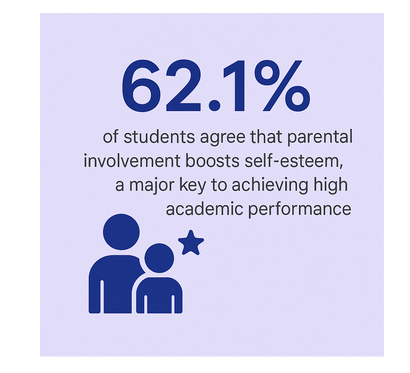
Correlation between parent check ins and student performance.
Here are 7 effective (and easy!) questions to ask your child while they are in an online school, along with the reasons why each one matters.
1. What made you smile in class today?
Why it works: This allows them to relive a happy moment and creates room for positivity.
It moves the emphasis away from their performance and towards experience and connection. You might discover how something was surprisingly enjoyable for your child from a lesson, a humorous response from a classmate, or a teacher's joke.

A bonus is to gently ask, "If you had to pick one moment that didn't feel boring, what would it be?".
This allows them to reflect more freely, and you may be surprised at what they think of.
2. Did anything confuse you today?
Why it matters: Kids don't always tell when they're stuck. By normalising confusion, you can help them learn that it's okay to have doubts.
This fosters integrity, lets them be honest about their shortcomings, and pushes them toward problem-solving.

They also form the habit of recognising their confusion rather than hiding it.
Additionally, once they start to recognise what is challenging, they are more likely to ask for help—not just from you, but also from teachers.
3. What would you do differently if you were the teacher today?
Why it's so brilliant: When you ask them this question, they start thinking seriously.
First, they begin to introspect about what they have learned. Then they begin to analyse if their learning was effective or not.
Moreover, children absolutely love this role reversal as it lets them be creative and gives them control.

Their responses may also indicate that they prefer a certain style of instruction. Either way, it offers valuable insight into how they experience school.
4. Did you or someone else help you today?
Why does it develop character? This question inculcates so much into children. First of all, they start to understand that helping is good and it must be done.
The qualities of empathy and teamwork also take root in them. They realise that kindness can be exchanged even during online learning.
This lets them make friends and remember these good moments when they helped each other. 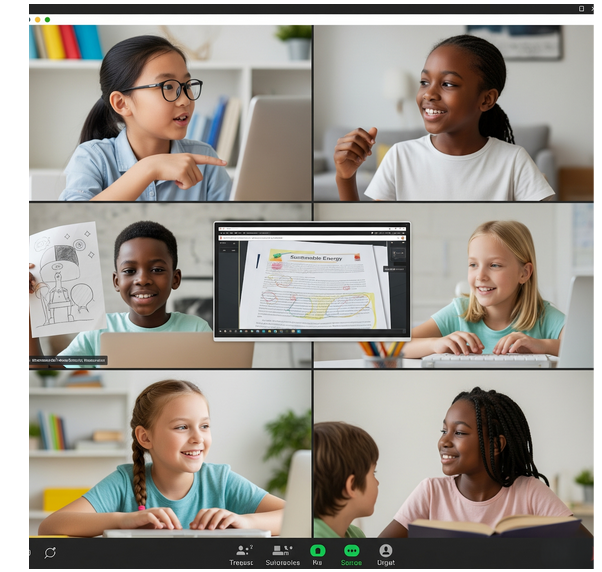
Therefore, these small social achievements certainly count.
5. Which part of the lesson felt the easiest? Which was the hardest?
Why it deepens self-awareness: Children are not always able to evaluate their own development.
This allows them to express their strengths and identify challenges early on, rather than waiting for report cards or meltdowns.
Perhaps there is a deeper interest to delve into through books, videos, or projects if science is always "the fun one."
6. What did your teacher say today that you remember most?
Why it's powerful: Many things are said by teachers, but not all of it is retained.
By asking your child this question, you can find out more about how well they process and retain information. This sets your expectations right also.
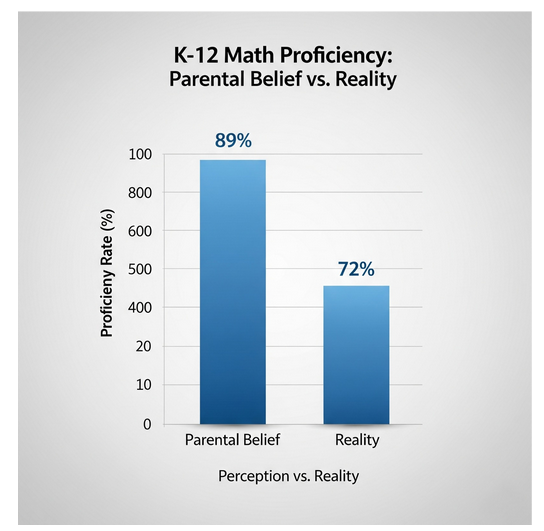
Parent perception of student grades vs. reality.
Their memories can be emotional at times ("He said he was proud of us for finishing the test") or academic at other times ("She said there are eight planets!"). In any case, you're connecting deeply with them and encouraging genuine learning.
7. What are you looking forward to in tomorrow’s class?
Why it sets the tone: This fosters the spirit of curiosity and eagerness in your child.
Their response will also reflect to you what topics are capturing their attention and what they may love to focus on in the future.
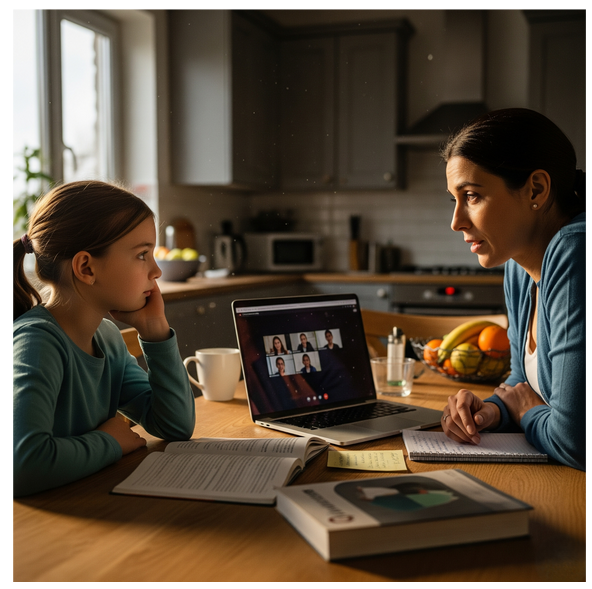
A strong motivator is anticipation. When students are anticipating something, even a small part of it, they are more likely to participate actively in class. By asking this question, you can find out what works and how to make it better.
Concluding Remarks: Connection Is Critical
Asking better questions doesn't take more time; it just requires a shift in approach. So, instead of quizzing, try inviting.
Monitoring your child's every move is not the goal of online learning. The objective is to create a space where they can think, express themselves, and feel supported, whether or not they use a screen.
Getting the correct answers is not the point of these questions. They are about having conversations that make your child feel heard, seen, and secure. They will feel more connected if you are more interested in them. And learning happens when a child feels included.
Because ultimately, their attitude towards learning is just as important as the knowledge they acquire. And starting that only requires one well-considered question. Try checking in rather than checking up. Try inviting rather than quizzing.
Frequently Asked Questions
Q1. Why should I enquire daily about online education with my child?
It makes learning more meaningful, promotes candid communication, and aids in their day-to-day processing.
Q2. In what ways do these enquiries enhance participation?
Instead of one-word responses, they encourage introspection, curiosity, and connection.
Q3. What if my kid doesn't say anything?
Remain calm, ask light-hearted and enjoyable questions, and refrain from putting undue pressure on them.
Q4. Are these questions appropriate for older children as well?
Indeed! Simply change the wording to reflect their level of maturity and interests.
Q5. How long do these discussions take?
Five minutes of sincere conversation can have a significant impact.
Q6. What is the primary objective of these enquiries?
To foster a positive attitude towards learning, self-awareness, and connection.
Mira Lew
Nov 02, 2025