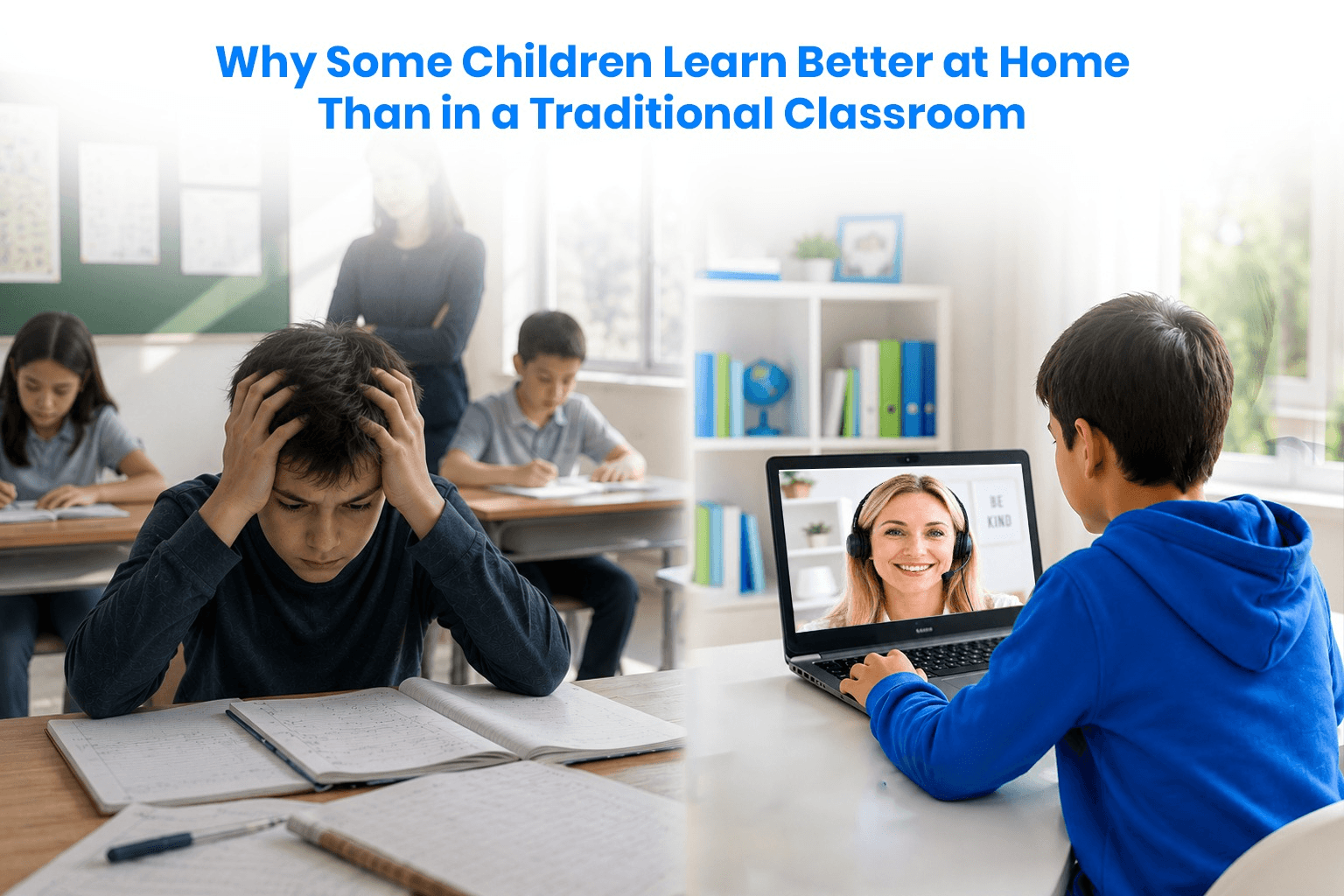
Why Some Children Learn Better at Home Than in a Traditional Classroom
Traditional classrooms run on a rigid, one-size-fits-all model where pacing, social pressure, and noise often drain a child's energy before actual learning takes place. Bright students frequently struggle at school not because of a lack of ability, but because the environment doesn't suit how they learn. Moving to a flexible, home-based or online learning environment removes these unnecessary barriers, rebuilding a child's confidence and allowing them to thrive at their own speed.
"My child isn't lazy."
A father said this to me on a call last year, and the way he said it, I could tell he'd been rehearsing it. Like he'd had to defend his son so many times that the sentence had worn a groove.
The boy was eleven. Bright kid, apparently. He built entire cities in Minecraft with working rail systems every day. But mornings before school were a war with him, homework ended in tears twice a week, and his marks looked like they belonged to a different child than the one who explained redstone circuits to his dad at dinner.
The father's question, eventually, was: "Is something wrong with him?"
And honestly — probably not. In most of these cases, nothing is wrong with the child.
Something is wrong with the fit, or maybe his schedule does not match his goals.
Something is wrong with the fit, or maybe his schedule does not match his goals.
You've probably seen this happen at your own kitchen table
Six hours at school. Your kid comes home wrung out. You sit down together with the maths homework, dreading it.
And they get it in fifteen minutes.
The same lesson that apparently defeated them all afternoon. Fifteen minutes at the kitchen table, with a snack.
Parents tell us about this constantly, and they always say it like they've discovered something slightly embarrassing — as if they're claiming they teach better than the school does. But that's not what's happening. You're not a better teacher than the school. Your kitchen is a better environment than the classroom. For your particular kid. That's it.
No noise. No clock. Nobody is watching them get it wrong. No period bell is about to cut the thought in half.
Sometimes changing the room changes everything.
The myth that quietly damages kids
Here's the assumption baked into traditional schooling: thirty children of the same age should understand the same lesson, in the same room, on the same day, at the same speed.
Say it out loud, and it's obviously absurd. Nobody believes it. Yet the entire structure runs on it.
Some kids grasp a maths concept the first time. Some need it explained twice, differently. Some learn by reading, some by arguing about it, some by taking the thing apart with their hands. None of this maps onto intelligence — I've seen very sharp kids who just need a slower runway, and average students who happen to sync perfectly with classroom pacing and look brilliant because of it.
One teacher, thirty students. The class has to move together, so the class moves at one speed. The kids who match that speed do fine. The ones who don't... they don't fall behind because they're less capable. They fall behind because the teaching pace never slows down for them.
And then they get called slow. Or lazy. And after enough years of that, they start to believe it — which is the part that actually does the damage.
Why do smart kids need Online schools?
For some kids, school is hard because of everything except the lessons: the noise. The corridors. The seven-different-rooms-a-day schedule. The social chess of who sits where. The low hum of being watched by twenty-nine other people every time you raise your hand.
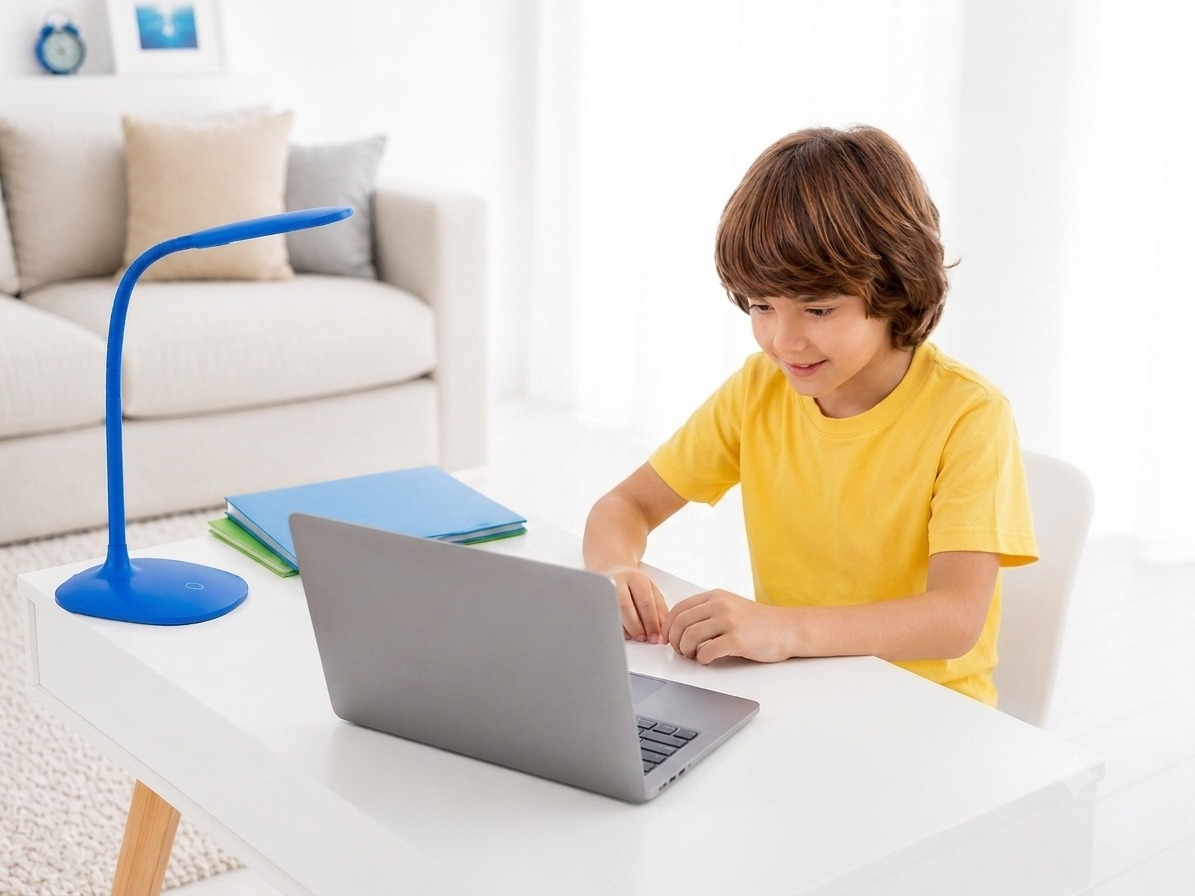
Some children shrug all that off. Genuinely don't notice it.
Others spend so much energy just managing the environment that there's barely anything left for the actual learning, even if they are intelligent. These are often the kids described as "fine but quiet" or "capable but doesn't participate" — teachers aren't wrong about them, they're just seeing a child running at 30% because the other 70% is going into coping.
Take the environment away, and it can be startling.
Kids who have never raised a hand start asking questions in their first week of online classes. Not because they changed. Because the tax they were paying is gone, and the wrong answer in a class of twelve, from your own room, just doesn't cost what it costs in a hall of thirty.
They stop performing in school and start learning. Different thing entirely.
All they needed was a safe and flexible learning environment to study.
All they needed was a safe and flexible learning environment to study.
What does "own pace" actually do?
Picture your child reading a chapter and needing ten more minutes with it.
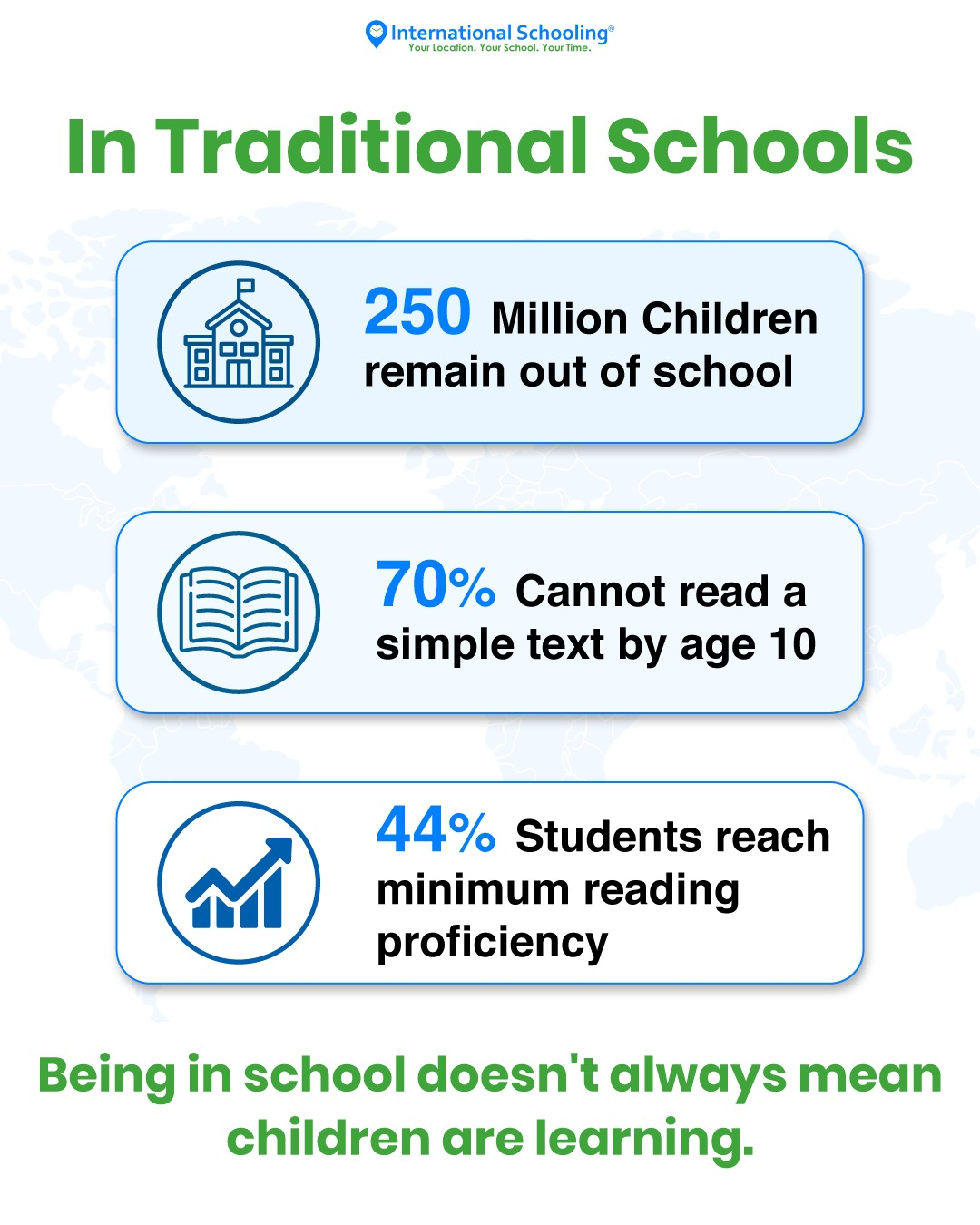
In a classroom, those ten minutes don't exist. Children in traditional schooling face a massive global challenge today: 250 million children are out of school. About 70% of 10-year-olds in low- to middle-income countries cannot understand a simple text.
And when this happens, the lesson leaves without them, and now they're carrying a gap into the next topic, and the gap compounds. Half of what looks like "struggling in maths" is really just an unpaid ten minutes from three weeks ago. But at the best online school, this problem does not occur.
And when this happens, the lesson leaves without them, and now they're carrying a gap into the next topic, and the gap compounds. Half of what looks like "struggling in maths" is really just an unpaid ten minutes from three weeks ago. But at the best online school, this problem does not occur.
At home — they pause. Rewatch the explanation. Ask. Sit with it. Then move on as a whole.
Do that for a term, and you get the thing every parent actually wants, which was never really the grades. It's the confidence. A child who fully understands what they learned with the self-paced learning plan. He doesn't just score better — he walks differently. They volunteer answers. They stop flinching at new topics.
Grades follow confidence around. Rarely the other way.
"But won't they be alone all day?"
Fair worry. Also, mostly outdated.
A fully accredited online school isn't a kid alone with a laptop, study material, and a PDF. There are live classes with real certified teachers, classmates to argue with in group classes, group discussions, group projects, clubs, and competitions. At International Schooling, a child's classmates might be in Brazil, the UAE, and Japan — which, for social exposure, is honestly a strange upgrade from thirty kids from the same postcode.
The classroom looks different. The connection is still there. Some kids — especially the quieter ones — connect more, not less, once the playground politics are out of the picture.
Who does this tend to work best for
No environment fits every child, and anyone who tells you online school is right for everyone is selling something.
But certain kids benefit enormously. Athletes whose training eats up the school day. Families who relocate for work — one move mid-year is disruptive, three moves across a childhood can be devastating, unless the school moves too. Kids who are simply wired for quiet. Kids who've been bullied and need the pressure off before they can care about school again. Kids who are ahead and bored stiff, and kids who need more time and are tired of being made to feel bad about it.
The common thread isn't ability. It's that the standard environment was costing them more than it gave.
Maybe it was never about fixing the child
Parents can spend years trying to sand a child down to fit a classroom. Tutors, reward charts, stern talks, more tutors.
At some point, the better question is the other one: is the classroom fitting the child?
Because education isn't about where a child sits between 8 and 2. It's whether they're growing. Whether the curiosity is still alive. Whether they believe they're the kind of person who can learn things — because that belief, once lost, is very hard to rebuild, and once solid, carries them through everything.
Put a child in an environment that matches how they actually learn, and something shifts, usually within weeks. They stop trying to keep up with everyone else and start moving at their own speed — which, freed from the conveyor belt, is often faster than anyone expected.
That father with the Minecraft son? The boy is with us now. The first thing he asked his teacher was whether he could do his geography project on transport networks.
He got an A. Of course he did. He'd been studying the subject for years — just not anywhere school could see it.
Suggested Read
International Online School in the USA
The Education System in the USA: A Gateway for International Students
Give Your Child a World-Class Education
Enroll in our international school and unlock global opportunities for academic success.
Mira Lew
Jul 28, 2026